In today’s manufacturing world, precision is everything. Even the smallest component matters—its dimensions, threads, surface finish, and overall consistency can make or break the performance of an entire assembly. That is why Brass CNC Turned Components have become so essential.
CNC turning lets manufacturers create brass parts with incredible accuracy and reliable, repeatable quality. Brass is a favorite in the machining world for good reason: it has fantastic machinability, fights off corrosion easily, stands up to heavy wear and tear, and offers great electrical conductivity.
Based in Jamnagar, Gujarat—known as India’s brass city—JV Enterprise specializes in crafting high-precision brass components and custom CNC-machined parts. Using advanced CNC and automatic machinery, the team builds parts strictly to your drawings, specifications, and unique application needs.
What Are Brass CNC Turned Components?
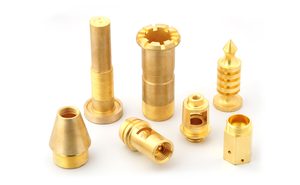
Brass CNC Turned Components are precision-machined parts manufactured from brass using computer-controlled turning equipment.
During CNC turning, a brass rod, bar, or suitable blank is securely held while cutting tools remove material according to a programmed design. This allows manufacturers to create accurate external and internal features.
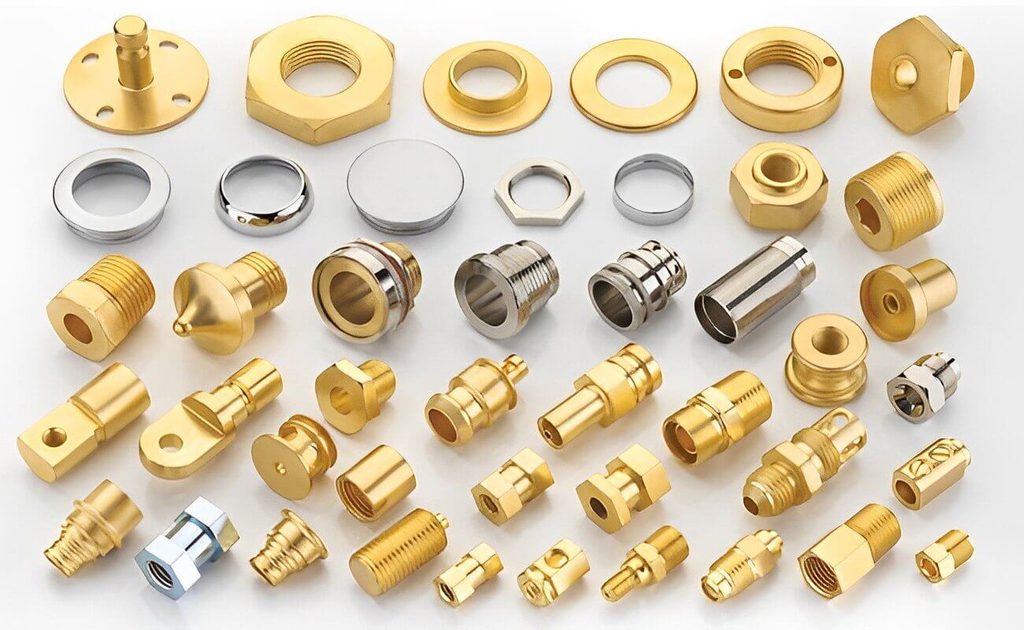
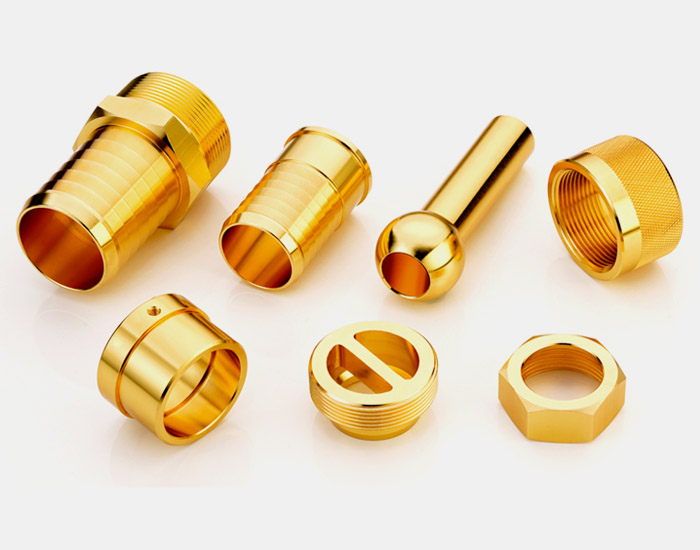
Common CNC turned brass components include:
- Brass bushes
- Brass inserts
- Brass pins
- Brass shafts
- Brass spacers
- Brass connectors
- Brass fittings
- Brass sleeves
- Brass threaded components
- Custom-machined brass parts
Why Are Brass CNC Turned Components Important?
Mix the natural strengths of brass with the precision of modern CNC machining, and you get parts that don’t just look good on paper—they hold up where accuracy is non-negotiable.
- High Dimensional Accuracy
With CNC machines, you can nail those specs again and again. JV Enterprise works within tight tolerances—from ±0.01 mm to ±0.05 mm, depending on what your drawings call for. - Excellent Machinability
Brass basically begs to be machined. It’s easy to turn and shape, which means you can get complex profiles, tricky threads, deep grooves, fine holes, and just about any custom detail you want—without a headache. - Consistent, Repeatable Production
Program the CNC, set it running, and every part comes out exactly like the last one. The first matches the ten-thousandth. No surprises. - Strong Corrosion Resistance
Brass doesn’t quit when the weather turns or in tough environments, so it’s a go-to for everything from industrial machines and plumbing to electrical parts. - Fully Customizable
Need something unique? CNC turning lets you shape brass exactly to your blueprints, so every feature matches your needs. You dream it—manufacturers make it.
Brass Materials Used for CNC Turned Components
Selecting the appropriate brass grade is an important part of component manufacturing.
JV Enterprise’s published specifications list materials.
The appropriate material depends on the component design, application, required properties, and customer specifications.
Brass rods, bars, and forged blanks can be used as raw materials depending on the component and manufacturing process.
How Are Brass CNC Turned Components Manufactured?
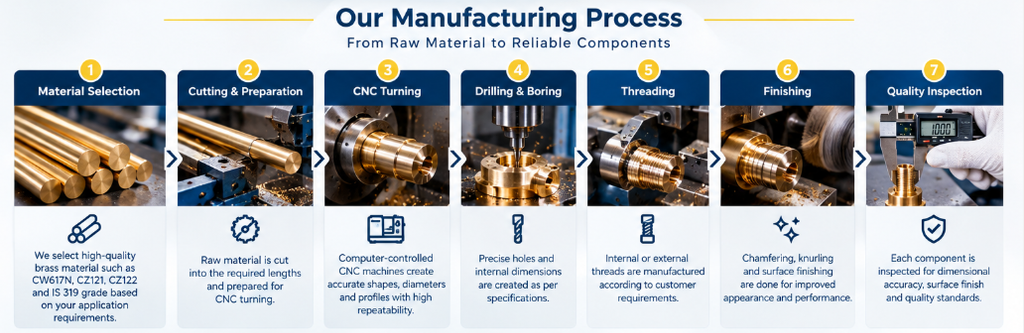
The manufacturing process involves several controlled stages.
Step 1: Material Selection
Suitable brass material is selected according to the component’s design, application, and technical requirements.
Step 2: Raw Material Preparation
Brass rods, bars, or forged blanks are prepared according to the required machining setup.
Step 3: CNC Turning
The material is placed in the CNC turning machine. Computer-controlled cutting tools remove material to create the required diameter, profile, grooves, shoulders, and other features.
Step 4: Drilling & Boring
Where required, drilling and boring operations create holes and internal dimensions according to the component drawing.
Step 5: Threading
Internal or external threads can be produced according to the required thread specification.
Step 6: Finishing
Additional operations such as chamfering, knurling, deburring, or surface finishing may be performed depending on the component design.
Step 7: Quality Inspection
The finished components are checked for dimensions, threads, surface finish, and other specified quality requirements before dispatch.
Applications of Brass CNC Turned Components
Because brass combines machinability, durability, corrosion resistance, and other useful properties, CNC turned components can be used across several industries.
Automotive Industry
Brass CNC turned components can be used for connectors, bushes, spacers, sensors, fittings, and other precision vehicle components.
Electrical & Electronics
Precision brass components are used in terminals, contacts, pins, connectors, and electrical fittings where accurate dimensions and reliable connections are important.
Plumbing
CNC turned brass components can be used for adapters, inserts, valves, fittings, and threaded components used in plumbing systems.
HVAC
Brass components can be used in refrigeration fittings, connectors, adapters, and other HVAC-related applications.
Industrial Machinery
Precision-machined brass shafts, sleeves, couplings, spacers, and other components can be incorporated into machinery and engineering assemblies.
These application areas correspond with the industries listed on JV Enterprise’s Brass CNC Turned Components page.
Custom Brass CNC Turned Components
Every industrial application has different requirements. A standard component may not always fit a particular assembly or machine.
Custom CNC manufacturing allows components to be produced according to:
- Customer drawings
- Component dimensions
- Thread specifications
- Material requirements
- Surface-finish requirements
- Component geometry
- Application requirements
- Production quantities
JV Enterprise focuses on customized brass components manufactured according to customer drawings and specifications.
Quality Control for Brass CNC Turned Components
Quality control is an important part of precision manufacturing.
A CNC turned component is not considered complete simply because it has been machined. Its dimensions, threads, finish, and other requirements need to be checked against the component specifications.
JV Enterprise describes a quality process that includes:
- Raw material inspection
- Dimensional verification
- CNC precision manufacturing
- In-process quality checks
- Thread accuracy testing
- Surface-finish analysis
- Functional testing
- Final product inspection
- Packaging verification
This systematic approach helps maintain consistency throughout production.
Why Choose JV Enterprise for Brass CNC Turned Components?
Located in Jamnagar, Gujarat, JV Enterprise specializes in precision brass components and customized machining solutions.
Its manufacturing infrastructure includes CNC machines, automatic turning machines, drilling equipment, finishing equipment, and quality-testing instruments.
The company’s manufacturing approach focuses on:
- Precision CNC machining
- Customized component manufacturing
- Consistent production quality
- Quality inspection
- Customer-specific specifications
- Industrial applications
For businesses requiring customized brass turned components, the ability to manufacture according to engineering drawings and specifications can be particularly useful.