Author: Admin

  • Brass EV Electrical Pins :- Precision Components for Reliable EV Connections

    Brass EV Electrical Pins

    Electric vehicles are everywhere now, and honestly, they’re changing the game—but you need solid parts to keep up. That’s where brass EV electrical pins come in hot. These little guys are basically the unsung heroes inside all those charging stations, battery packs, connectors—anywhere you want juice flowing without a hitch.

    If you dig into the details, it’s not just any metal shoved in there. These pins are built using top-tier brass, cranked out with some serious precision so they’re tough, won’t rust out, and can handle the volts (without melting down or getting all wonky). JV Enterprise, for example, doesn’t mess around—they’ll custom-make these pins just how you want ‘em, down to the last millimeter. So yeah, without all this behind-the-scenes engineering, your fancy EV isn’t going anywhere fast.

    What Are Brass EV Electrical Pins?

    So, brass EV electrical pins—these aren’t just little pieces of metal tossed into connectors. I mean, if you crack open any modern electric vehicle’s connector assembly, chances are you’ll spot these shiny brass pins sitting at the heart of the operation, quietly making sure electricity flows exactly where it needs to go. The precision machining part matters a ton because if they’re off by even a little bit, you end up with flaky connections, which is pretty much a nightmare for anything electric, especially for critical EV systems.

    Now, why brass? It’s sort of the MVP for electrical pins. Brass hits this sweet spot: it’s got solid electrical conductivity (not quite up there with copper, but close enough), plus, it’s really easy to machine into all sorts of shapes and sizes without breaking or bending. That makes manufacturing efficient, so manufacturers don’t have to wrestle with the material, and the finished pins still have some muscle—they can withstand mechanical stress, vibrations, and whatever else EVs throw at them.

    But, the story doesn’t end there. Depending on where these pins end up, they often get a fancy surface treatment. You know, like nickel for corrosion resistance, tin for decent cost-effective conductivity, silver for even better contact (and a bit of bling), or gold if you want ultra-reliable, ultra-low-resistance connections. Each coating adds its own flavor—some make it tougher, others boost conductivity or help prevent oxidation. It’s like customizing your character stats in a video game.

    Anyway, if you ever spot a JV Enterprise logo on these pins, you can bet they’re up to the industry standards. They know what’s at stake—reliable pins mean fewer headaches for EV designers, smoother rides for drivers, and fewer warranty claims for manufacturers. Kinda wild how much rides on those tiny, shiny bits, right?

    When it comes to EV electrical systems, you definitely want parts you can count on—especially those tiny contact pins that pull way more weight than you’d think. If those pins are junk, you’re likely to see flaky connections, lame electrical performance, or even an early trip to the scrap heap.

    Now, brass pins made with real attention to detail? Total game-changer. They’ve got solid electrical contact, sweet conductivity, and they’re cut to super tight tolerances. So, they fit right every time. Plus, brass doesn’t throw a fit when things get rough—resists rust, handles stress, and pretty much shrugs off harsh environments. As for customization? No sweat, brass pins can be tailored for whatever wild connector design you cook up.

    Bottom line: all this good stuff makes high-quality brass pins perfect for EVs and automotive wiring, no matter how crazy the application. Trustworthy, tough, and always ready to carry the current.

    Key Applications of Brass EV Electrical Pins

    Brass EV electrical pins, honestly, are everywhere in electric cars and related gear. Here’s the rundown—

    1. EV Charging Connectors

    For starters, you’ll find them inside EV charging connectors. Those pins are what make sure your car actually gets juice from the charger—no pins, no power, basically.

    2. EV Battery Packs

    They’re all over battery packs too. If you need a tight, precise connection inside those packs where every millivolt matters? Brass pins are the MVP.

    3. Battery Management Systems

    Battery Management Systems rely on these pins for monitoring, control, and all the nerdy stuff that keeps the batteries safe and healthy. Again, brass pins, doing the work, hidden behind the scenes.

    4. EV charging stations

    EV charging stations are another spot. Inside plugs, sockets, whatever—these pins guarantee you’re not left waiting around while your ride refuses to charge.

    5. Automotive Electrical Systems

    Don’t forget the electrical guts of cars, buses, scooters, all sorts of e-mobility things. Manufacturers often customize these pins to fit, so they work reliably no matter what kind of machine you’re driving.

    6.power distribution assemblies

    And, finally, in power distribution assemblies—where those heavy-duty currents get shuffled around—brass electrical pins are basically the unsung heroes making sure nothing gets fried.

    Bottom line? If you see something electric in a vehicle, chances are brass pins are making it happen behind the scenes.
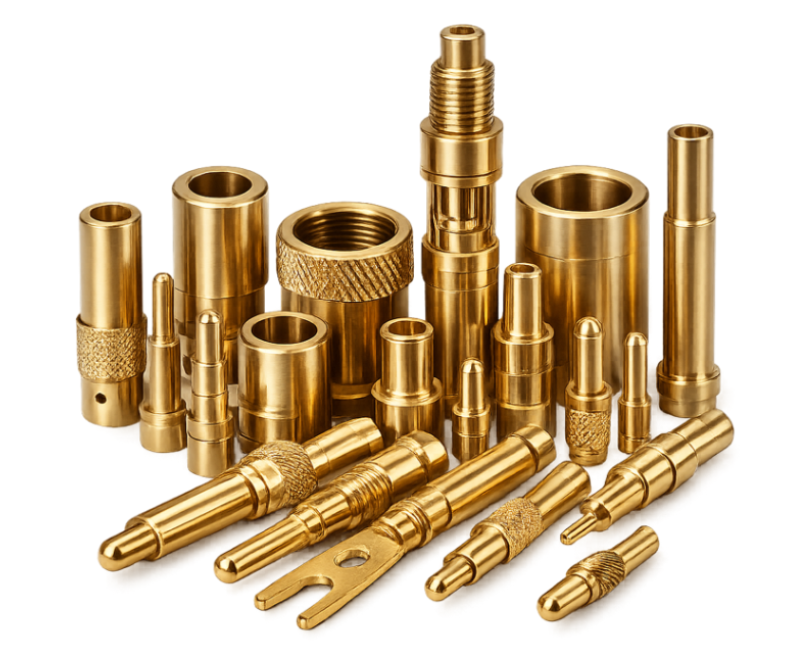
    Electric Vehicle Electrical Components

    Getting high-quality electrical pins isn’t just about ticking boxes—it actually keeps connectors working smoothly, every time. Here’s why top-notch pins, especially brass ones, are a smart move:

    1. Brass is a dream for machinists. You want weird, tiny shapes? No problem—this stuff cuts like butter and gets those complex designs just right.
    2. It’s got the juice, too. Good brass grades don’t waste your current; they let electricity flow right through, which is kinda the point.
    3. Rust? Nah. Brass laughs in the face of corrosion, so your pins won’t be crumbling away, even if things get a bit rough out there.
    4. Consistent sizing is the real MVP. Thanks to CNC tech, you get pins that are basically clones of each other—no surprises when you start plugging things together.
    5. Need something custom? They’ve got your back. If you can sketch it, they can probably make it, right down to your exact specs.
    6. Last but not least, you get choices with the finish line—plating options galore, matched for whatever electrical or environmental chaos you want to throw them into.

    In short: Good pins = less hassle, more reliability, and no mystery surprises when you hook everything up.

    Why Choose JV Enterprise for Brass EV Electrical Pins?

    Alright, let’s cut through the corporate speak. JV Enterprise isn’t just churning out random brass bits—they’re seriously dialed in on making brass components where accuracy actually matters. Their game is all about producing stuff like brass electrical pieces, inserts, CNC turned parts, and other snug-fitting precision bits. Basically, if you need brass to fit somewhere, exactly the way you want, these folks can make it happen.

    Especially for EV makers, people building connectors, electrical gear companies, and OEMs, JV Enterprise can whip up custom brass pins to match your drawings and specs. None of that generic one-size-fits-all nonsense.

    And let’s be real—brass electrical pins for EVs? They may look tiny, but if they’re not reliable, your shiny new car isn’t going anywhere. JV Enterprise takes care to use quality brass, high-precision CNC machines, custom finishing, and actual inspection (not just eyeballing) so those pins keep the juice flowing, even when things get wild in a real-world application.

    Need something custom? No sweat. They can crank out tailored brass EV pins for pretty much any spec, keeping pace with the EV boom and everything else with wires and motors. Basically, if you need serious, reliable brass parts, these are the folks you call.
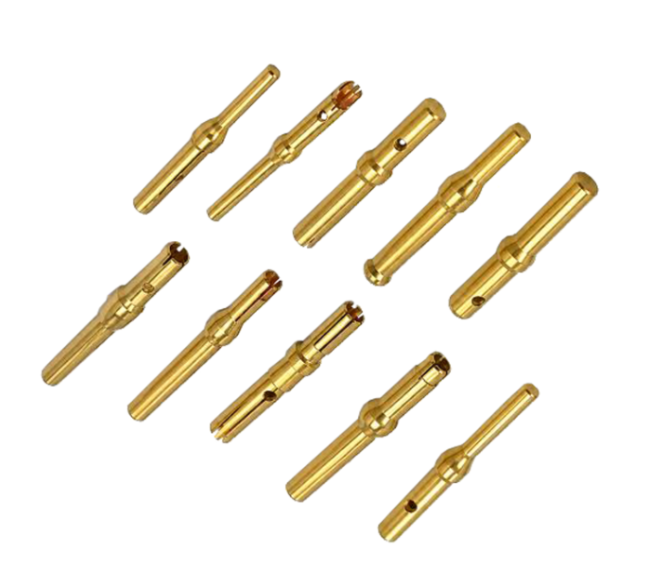
  • Brass CNC Turned Components : Powerful Superior Precision-Machined Brass Parts for Accuracy & Performance

    Brass CNC Turned Components manufacturer in Jamnagar

    In today’s manufacturing world, precision is everything. Even the smallest component matters—its dimensions, threads, surface finish, and overall consistency can make or break the performance of an entire assembly. That is why Brass CNC Turned Components have become so essential.

    CNC turning lets manufacturers create brass parts with incredible accuracy and reliable, repeatable quality. Brass is a favorite in the machining world for good reason: it has fantastic machinability, fights off corrosion easily, stands up to heavy wear and tear, and offers great electrical conductivity.

    Based in Jamnagar, Gujarat—known as India’s brass city—JV Enterprise specializes in crafting high-precision brass components and custom CNC-machined parts. Using advanced CNC and automatic machinery, the team builds parts strictly to your drawings, specifications, and unique application needs.

    What Are Brass CNC Turned Components?

    Brass CNC Turned Components are precision-machined parts manufactured from brass using computer-controlled turning equipment.

    During CNC turning, a brass rod, bar, or suitable blank is securely held while cutting tools remove material according to a programmed design. This allows manufacturers to create accurate external and internal features.

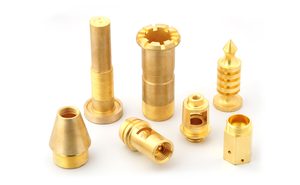
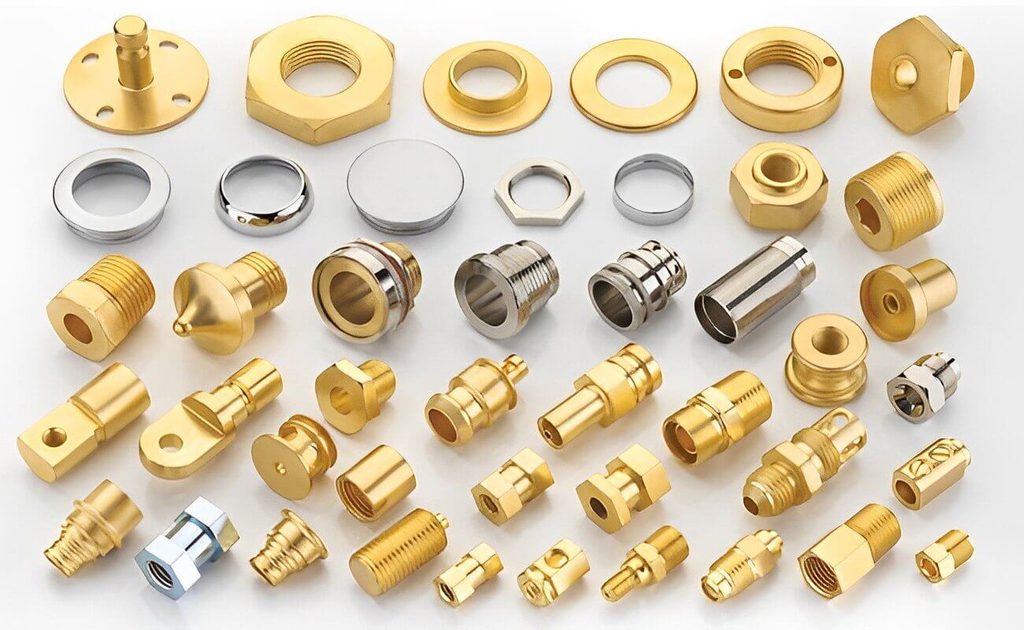
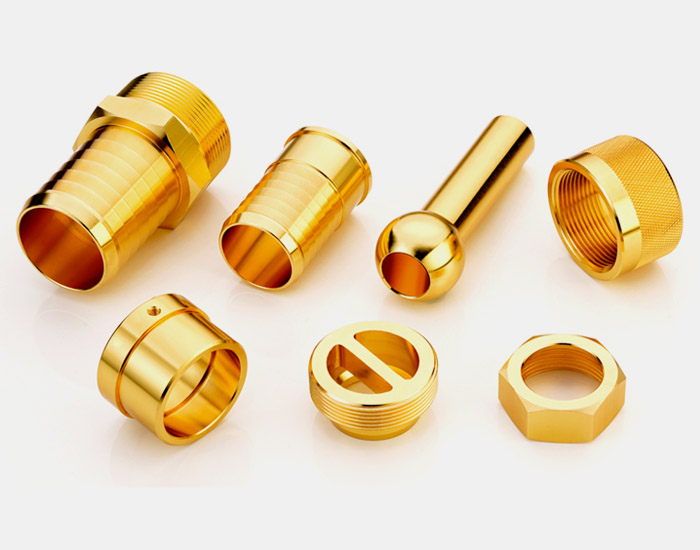
    Common CNC turned brass components include:

    Precision Brass CNC Turned Components

    Why Are Brass CNC Turned Components Important?

    Mix the natural strengths of brass with the precision of modern CNC machining, and you get parts that don’t just look good on paper—they hold up where accuracy is non-negotiable.

    1. High Dimensional Accuracy
      With CNC machines, you can nail those specs again and again. JV Enterprise works within tight tolerances—from ±0.01 mm to ±0.05 mm, depending on what your drawings call for.
    2. Excellent Machinability
      Brass basically begs to be machined. It’s easy to turn and shape, which means you can get complex profiles, tricky threads, deep grooves, fine holes, and just about any custom detail you want—without a headache.
    3. Consistent, Repeatable Production
      Program the CNC, set it running, and every part comes out exactly like the last one. The first matches the ten-thousandth. No surprises.
    4. Strong Corrosion Resistance
      Brass doesn’t quit when the weather turns or in tough environments, so it’s a go-to for everything from industrial machines and plumbing to electrical parts.
    5. Fully Customizable
      Need something unique? CNC turning lets you shape brass exactly to your blueprints, so every feature matches your needs. You dream it—manufacturers make it.

    Brass Materials Used for CNC Turned Components

    Selecting the appropriate brass grade is an important part of component manufacturing.

    JV Enterprise’s published specifications list materials.

    The appropriate material depends on the component design, application, required properties, and customer specifications.

    Brass rods, bars, and forged blanks can be used as raw materials depending on the component and manufacturing process.

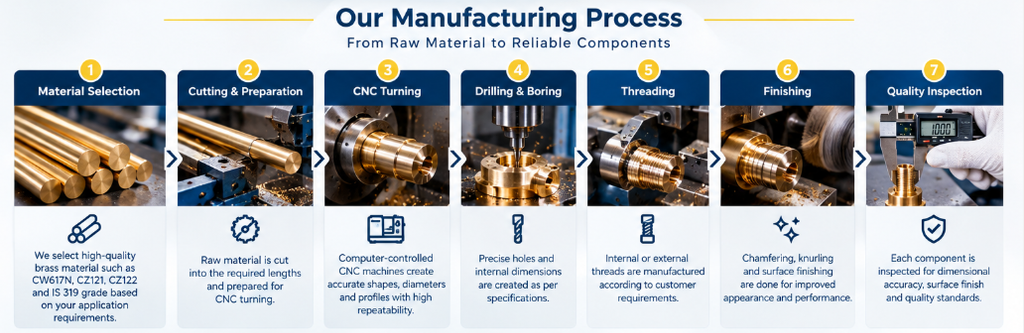
    How Are Brass CNC Turned Components Manufactured?

    The manufacturing process involves several controlled stages.

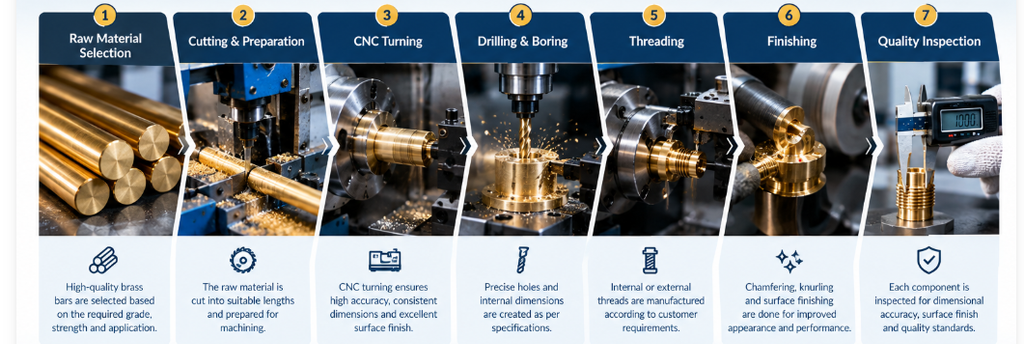
    Step 1: Material Selection

    Suitable brass material is selected according to the component’s design, application, and technical requirements.

    Step 2: Raw Material Preparation

    Brass rods, bars, or forged blanks are prepared according to the required machining setup.

    Step 3: CNC Turning

    The material is placed in the CNC turning machine. Computer-controlled cutting tools remove material to create the required diameter, profile, grooves, shoulders, and other features.

    Step 4: Drilling & Boring

    Where required, drilling and boring operations create holes and internal dimensions according to the component drawing.

    Step 5: Threading

    Internal or external threads can be produced according to the required thread specification.

    Step 6: Finishing

    Additional operations such as chamfering, knurling, deburring, or surface finishing may be performed depending on the component design.

    Step 7: Quality Inspection

    The finished components are checked for dimensions, threads, surface finish, and other specified quality requirements before dispatch.

    Brass CNC Turned Components manufacturing process

    Applications of Brass CNC Turned Components

    Because brass combines machinability, durability, corrosion resistance, and other useful properties, CNC turned components can be used across several industries.

    Automotive Industry

    Brass CNC turned components can be used for connectors, bushes, spacers, sensors, fittings, and other precision vehicle components.

    Electrical & Electronics

    Precision brass components are used in terminals, contacts, pins, connectors, and electrical fittings where accurate dimensions and reliable connections are important.

    Plumbing

    CNC turned brass components can be used for adapters, inserts, valves, fittings, and threaded components used in plumbing systems.

    HVAC

    Brass components can be used in refrigeration fittings, connectors, adapters, and other HVAC-related applications.

    Industrial Machinery

    Precision-machined brass shafts, sleeves, couplings, spacers, and other components can be incorporated into machinery and engineering assemblies.

    These application areas correspond with the industries listed on JV Enterprise’s Brass CNC Turned Components page.

    Custom Brass CNC Turned Components

    Every industrial application has different requirements. A standard component may not always fit a particular assembly or machine.

    Custom CNC manufacturing allows components to be produced according to:

    1. Customer drawings
    2. Component dimensions
    3. Thread specifications
    4. Material requirements
    5. Surface-finish requirements
    6. Component geometry
    7. Application requirements
    8. Production quantities

    JV Enterprise focuses on customized brass components manufactured according to customer drawings and specifications.

    Quality Control for Brass CNC Turned Components

    Quality control is an important part of precision manufacturing.

    A CNC turned component is not considered complete simply because it has been machined. Its dimensions, threads, finish, and other requirements need to be checked against the component specifications.

    JV Enterprise describes a quality process that includes:

    • Raw material inspection
    • Dimensional verification
    • CNC precision manufacturing
    • In-process quality checks
    • Thread accuracy testing
    • Surface-finish analysis
    • Functional testing
    • Final product inspection
    • Packaging verification

    This systematic approach helps maintain consistency throughout production.

    Why Choose JV Enterprise for Brass CNC Turned Components?

    Located in Jamnagar, Gujarat, JV Enterprise specializes in precision brass components and customized machining solutions.

    Its manufacturing infrastructure includes CNC machines, automatic turning machines, drilling equipment, finishing equipment, and quality-testing instruments.

    The company’s manufacturing approach focuses on:

    • Precision CNC machining
    • Customized component manufacturing
    • Consistent production quality
    • Quality inspection
    • Customer-specific specifications
    • Industrial applications

    For businesses requiring customized brass turned components, the ability to manufacture according to engineering drawings and specifications can be particularly useful.

    Brass CNC Turned Components are precision-machined parts manufactured from brass

  • Brass Precision Components: High-Accuracy Solutions for Modern Industries

    In today’s manufacturing world, even the tiniest part can make a huge difference in how a product works, how safe it is, and how long it lasts. That’s why Brass Precision Components matter so much.

    Brass is a go-to material in engineering for good reason—it’s easy to machine, tough, stands up well to corrosion, and has some solid electrical qualities too. With the right level of precision during manufacturing, brass turns into reliable, exact components built to handle tough industrial jobs.

    JV Enterprise , based in Jamnagar, specializes in these kinds of parts. They focus on precision-engineered brass products and custom machining, turning customer drawings and requirements into real-world components. Their team uses CNC and automatic machines to make sure every part matches the specific needs and specs for any application.

    What Are Brass Precision Components?

    Brass Precision Components are accurately machined parts manufactured from brass to meet specific dimensional and functional requirements.

    Unlike standard components, precision parts are produced with close attention to dimensions, threads, bores, surface finish, shapes, and other engineering specifications.

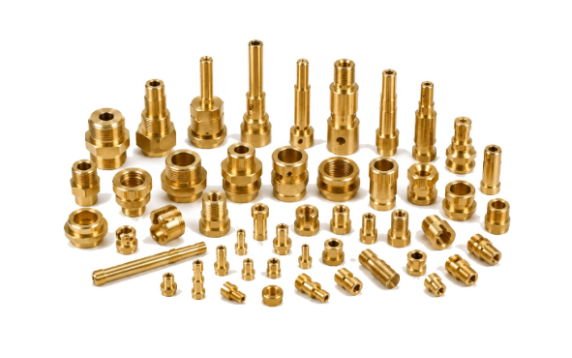
    Depending on the application, brass precision components can include:

    These components can be developed in different shapes, sizes, thread configurations, and finishes according to the requirements of the application.

    Why Are Brass Precision Components Important?

    Even the smallest component matters—a lot. If it’s not accurate, everything else down the line can suffer. Parts might not fit right, assemblies get tricky, things wear out faster, or performance just isn’t consistent. That’s why manufacturers rely on precision machining. It means every piece meets the exact same dimensions every time. You get reliability, not surprises.

    1. High Dimensional Accuracy

    Precision machining delivers parts with spot-on dimensions. So, if your project needs things to fit together perfectly, this makes a real difference.

    1. Excellent Machinability

    Brass is great for machining. It handles turning, drilling, boring, threading, reaming, chamfering, and knurling without trouble.

    1. Corrosion Resistance

    Brass stands up well to corrosion. That makes it an easy choice for anything electrical, plumbing systems, and a lot of engineering uses.

    1. Reliable Mechanical Performance

    The right type of brass, paired with precision machining, gives you parts that are strong, long-lasting, and hold their shape.

    1. Custom Manufacturing

    Precision manufacturing isn’t just about accuracy—it’s about flexibility. Manufacturers can make parts tailored exactly to your designs and technical needs.

    Precision Brass Components for industrial applications

    How Are Brass Precision Components Manufactured?

    Manufacturing a precision component involves multiple stages. Each stage contributes to the accuracy and final quality of the product.

    Step 1: Material Selection

    The manufacturing process begins with selecting suitable brass material according to the component’s intended application and technical requirements.

    Step 2: Cutting and Preparation

    The raw material is prepared into suitable sizes for machining.

    Step 3: CNC Turning

    CNC turning is used to produce accurate cylindrical and specially shaped components. Computer-controlled machining helps maintain consistency during production.

    Step 4: Drilling and Boring

    Drilling and boring operations are used to create accurate holes and internal dimensions required by the component design.

    Step 5: Threading

    Internal or external threads can be manufactured according to the required specifications.

    Step 6: Finishing Operations

    Additional processes such as chamfering, knurling, and surface finishing may be carried out depending on the component design.

    Step 7: Quality Inspection

    The finished components are inspected to verify dimensions, appearance, and other required quality parameters before final dispatch.

    Brass Precision Components manufacturing process

    What Makes a Good Brass Precision Components Manufacturer?

    Choosing a manufacturing partner is about more than simply finding someone who can produce a component.

    Important factors include:

    Precision Manufacturing: Modern CNC and automatic machinery can help maintain consistency across production.

    Quality Control: Inspection at different stages helps identify dimensional or manufacturing issues.

    Customization: The ability to manufacture according to customer drawings is important for specialized applications.

    Production Capability: Suitable machinery and infrastructure support both standard and customized manufacturing requirements.

    Technical Experience: Skilled manufacturing teams help convert engineering requirements into finished components.

    Timely Delivery: Efficient production planning and logistics support help businesses maintain their supply schedules.

    JV Enterprise highlights precision manufacturing, customized solutions, quality assurance, timely delivery, experienced teams, and competitive manufacturing solutions among its manufacturing strengths.

    Why Choose JV Enterprise for Brass Precision Components?

    Located in Jamnagar, Gujarat, JV Enterprise focuses on precision brass components and customized engineering solutions.

    The company’s manufacturing infrastructure includes CNC machines, automatic turning machines, drilling equipment, finishing equipment, and quality-testing instruments.

    Its manufacturing approach focuses on:

    • Precision machining
    • Customized component production
    • Consistent manufacturing quality
    • Quality inspection
    • Customer-specific specifications
    • Industrial and commercial applications

    With these capabilities, JV Enterprise serves businesses looking for precision brass components manufactured according to their engineering requirements.

  • Brass Bush Manufacturer in India

    Brass Bush Manufacturer in India

    Premium Brass Bush

    Brass bushes are widely used in electrical, automotive, plumbing, machinery, engineering and industrial applications where dimensional accuracy, durability and corrosion resistance are important. These components provide reliable mechanical support and are commonly used as sleeves, spacers, bearing components, threaded bushes and connecting components.

    Choosing the right Brass Bush Manufacturer in India is important when applications require consistent dimensions, accurate threads, reliable material quality and long-term performance.

    At JV Enterprise, precision-engineered brass bushes are manufactured using quality brass materials and advanced CNC machining processes for different industrial and OEM requirements. The company manufactures brass bushes in different sizes, shapes, thread configurations and finishes according to customer drawings and specifications.

    What Is a Brass Bush?

    A brass bush, also known as a brass bushing, is a cylindrical or specially shaped component manufactured from brass. It is generally used between moving or mating parts to provide mechanical support, reduce friction and maintain accurate alignment.

    Because brass offers good machinability, strength, corrosion resistance and electrical conductivity, it is widely selected for manufacturing precision bush components.

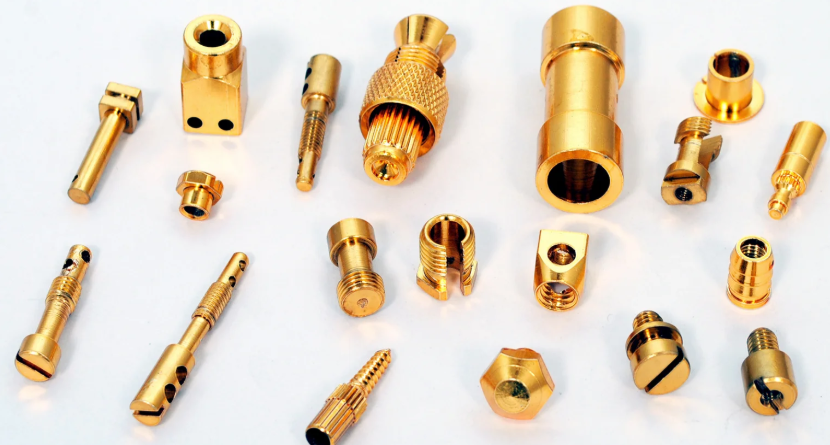
    Depending on the application, brass bushes can be manufactured with:

    • Internal and external threads
    • Different bore diameters
    • Flanges
    • Grooves
    • Knurling
    • Chamfers
    • Custom dimensions
    • Different surface finishes

    For specialized applications, custom brass bushes can be produced according to engineering drawings and OEM requirements.

    Types of Brass Bushes

    Different industries require different types of brass bush components. Common types include:

    1. Threaded Brass Bush

    Threaded brass bushes are designed with internal or external threads for secure installation in mechanical, plumbing and industrial assemblies.

    2. Brass Flanged Bush

    A flanged bush incorporates an extended flange that helps provide positioning and additional support within an assembly.

    3. Brass Sleeve Bush

    Sleeve bushes are cylindrical components used to support shafts and other moving parts while maintaining alignment.

    4. Precision Brass Bush

    Precision brass bushes are manufactured with controlled dimensions and tight tolerances for applications where accurate fitting is essential.

    5. Custom Brass Bush

    Custom brass bushes are manufactured according to customer drawings, specifications, dimensions, thread requirements and application conditions.

    Why Is Brass Used for Bushes?

    Brass is a popular material for bush manufacturing because it offers several useful engineering properties.

    Corrosion Resistance

    Brass provides good resistance to corrosion, making it suitable for plumbing, electrical and industrial environments.

    Excellent Machinability

    Brass can be efficiently machined using CNC turning and other precision manufacturing processes.

    Good Strength

    Brass provides a useful combination of mechanical strength and durability for many industrial applications.

    Electrical Conductivity

    Certain brass grades provide good electrical conductivity, making brass components suitable for electrical and electronic applications.

    Long Service Life

    Properly manufactured brass bushes can provide reliable performance and dimensional stability in demanding applications.

    Brass Bush Manufacturing Process

    The manufacturing process plays an important role in determining the quality and performance of a brass bush.

    At JV Enterprise, brass bushes are manufactured using precision machining technologies and quality-control procedures. The manufacturing process can include:

    Raw Material Selection → Cutting → CNC Turning → Drilling/Boring → Threading → Chamfering → Knurling → Surface Finishing → Dimensional Inspection → Final Inspection

    Advanced CNC machining helps achieve consistent dimensions, accurate threads and repeatable production quality. JV Enterprise’s current product information specifies processes including CNC turning, drilling, boring, reaming, chamfering, threading and knurling.

    Applications of Brass Bushes

    Brass bushes are used across a wide range of industries.

    Electrical Industry

    Brass bushes can be used in:

    • Electrical panels
    • Switchgear
    • Connectors
    • Busbar assemblies
    • Electrical fittings

    For related components, you can internally link to your Brass Electrical Components page.

    Automotive Industry

    Brass bushes are used in various automotive assemblies, including:

    • Mechanical linkages
    • Electrical assemblies
    • Sensors
    • Shafts and spacers
    • Precision fittings

    Plumbing Industry

    Brass bushes are widely used in:

    • Pipe fittings
    • Valves
    • Adapters
    • Plumbing assemblies
    • Water supply systems

    Industrial Machinery

    Industrial applications can include:

    • Shafts
    • Gearboxes
    • Machinery assemblies
    • Bearings
    • Couplings
    • Precision machine parts