
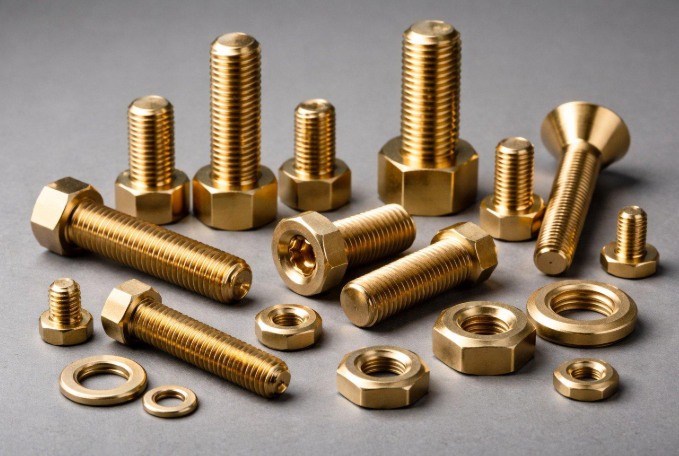
Reliable Brass Fasteners for Precision and Performance
Brass nuts, bolts, and screws—they’re everywhere. You’ll find them in electrical gear, cars, plumbing, electronics, and all kinds of machines. People use them because brass is easy to work with, fights off rust, and lets electricity flow. If you need fasteners that stick around and don’t mess up the quality of your projects, brass just works.
JV Enterprise in Jamnagar, Gujarat has made brass their business. They really pay attention to details—getting the size right, picking quality materials, and matching specs to whatever job you bring them. If you want brass fasteners you can count on, this company has your back.
Premium Brass Nuts, Bolts and Screws :-
Brass fasteners are basically the go-to hardware when you need to join or hold things together. They’re made from tough brass alloys and come in all shapes and sizes.
Brass nuts :- have threads on the inside and fit snugly onto matching bolts or studs.
Bolts :- They’ve got threads on the outside and usually team up with nuts to clamp stuff together.
Screws :- a bit different—they’re designed to be driven right into materials, and you’ll find them with specialized shapes and threads for whatever job you’ve got.
You can get these fasteners in tons of sizes, thread patterns, head styles, and finishes, so there’s pretty much always one that fits the job you need.
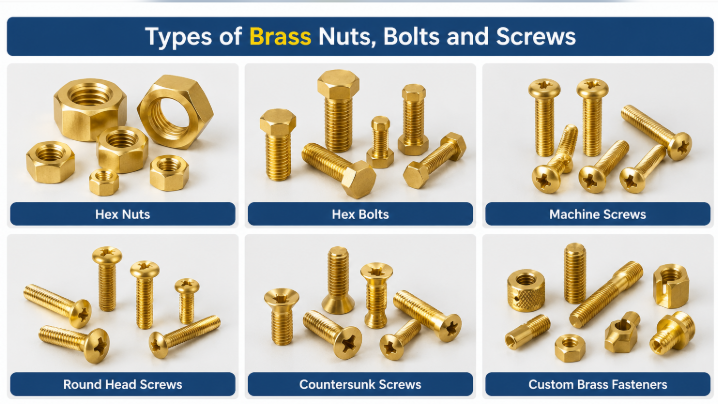
Types of Brass Nuts, Bolts and Screws
1. Brass Hex Nuts
Brass hex nuts feature a six-sided exterior for convenient tightening with standard tools. They are commonly used in electrical assemblies, machinery and general fastening applications.
2. Brass Hex Bolts
Brass hex bolts feature a hexagonal head and threaded shank. They are suitable for compatible mechanical and electrical assemblies where brass fasteners meet the required strength and operating conditions.
3. Brass Machine Screws
Brass machine screws are designed for use with compatible threaded holes or nuts. They are widely used in electronic equipment, electrical panels, instruments and precision assemblies.
4. Brass Round Head Screws
These screws feature a rounded head that provides a distinctive finished appearance. They are used in selected electrical equipment, fittings and applications where the head design is appropriate.
5. Brass Countersunk Screws
Countersunk brass screws are designed to sit flush with a suitably prepared surface. They are useful in selected electrical fittings, equipment housings and assemblies requiring a smooth finish.
6. Custom Brass Fasteners
Custom brass nuts, bolts and screws can be produced according to specified drawings, dimensions, thread sizes and application requirements. These options help manufacturers source components that fit their product designs.
Key Benefits of Brass Fasteners
Brass stands up well against corrosion, so it works great for all sorts of indoor and industrial uses. It doesn’t just look good—its electrical conductivity also makes it a solid pick for certain electronic and electrical fasteners where that extra charge matters.
Machining brass is easy, too. You can shape it into just about any threads, head types, or sizes you need, so it’s a favorite for precise fastener production. When you pair the right brass nuts, bolts, and screws with compatible parts and use them like they’re meant to be used, you get connections you can trust.
There’s something eye-catching about brass, too. Its shiny, metallic finish really pops in things like visible fittings, electrical outlets, or hardware that needs to look as good as it works.
On top of all that, brass fasteners come in different grades, thread types, sizes, and finishes. That means you’ve got tons of options to match whatever the job needs.
Applications of Brass Nuts, Bolts and Screws
Brass fasteners show up almost everywhere — they’re kind of a hidden hero in tons of industries. Take the electrical sector, for example.
Electrical Industry:
People use brass fasteners in electrical panels, terminal assemblies, connectors, and even in a few switchgear parts, thanks to their excellent conductivity and corrosion resistance. Electronics isn’t far behind either.
Electronics Industry:
You’ll find these fasteners securing delicate instruments, electronic housings, and all sorts of precision equipment — their reliability is crucial in protecting sensitive tech.
Automotive Industry:
In cars, brass fasteners help create strong electrical connections and fit into many vehicle assemblies. Mechanics appreciate them because brass doesn’t rust easily and keeps connections secure.
plumbing Industry:
The plumbing industry relies on brass for fittings, valves, and tons of plumbing assemblies. Brass won’t corrode when exposed to water, which makes it perfect for homes and businesses alike.
Lighting Industry :
Lighting — think lamps, fixtures, holders, and electrical accessories — often comes together with brass fasteners. The color and finish look good, and those fasteners are tough enough to keep everything in place.
Industrial Machinery:
Industrial machinery might seem a bit intense, but brass fasteners hold their own. They’re used in critical assemblies where you need reliability and the right specs.
Furniture and Hardware:
Furniture and hardware are another world where the look and feel of brass matter. Sometimes, you want hardware that isn’t just strong, but also stylish, and brass delivers both.
Brass Fasteners Manufacturing Process
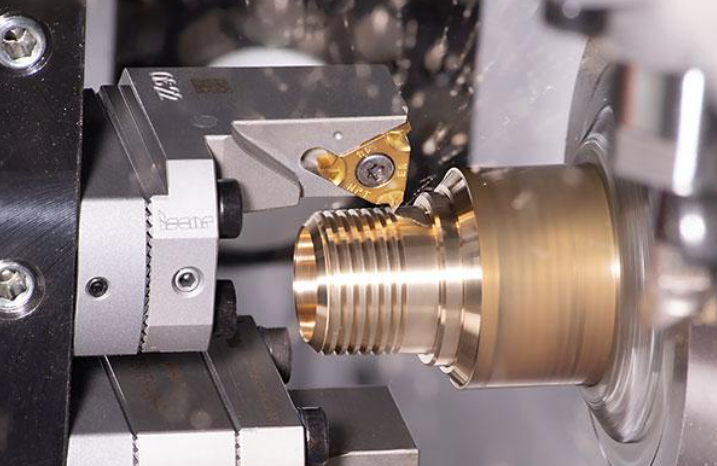
Producing consistent brass nuts, bolts and screws involves several manufacturing and inspection stages.
1. Brass Material Selection
The appropriate brass alloy is selected according to the required machinability, corrosion resistance and intended application.
2. Cutting and Component Forming
The raw material is cut or formed into the required starting shape based on the fastener design and production method.
3. Precision Machining
Suitable machining operations establish the required dimensions, head shape, shank diameter and other component features.
4. Threading
External threads are produced on bolts and screws, while internal threads are formed in nuts according to the specified thread dimensions and pitch.
5. Deburring and Surface Finishing
Machining burrs are removed, and the surface is finished according to the product specification.
6. Quality Inspection
The finished fasteners are checked against relevant specifications, including dimensions, thread compatibility and surface quality. Additional inspections may be required for specific customer applications.
Manufacturing methods vary depending on the fastener type, material, design complexity and order requirements.
Why Choose JV Enterprise for Brass Fasteners?
JV Enterprise, located in Jamnagar, Gujarat, India, operates in the brass components sector and focuses on precision-engineered products for industrial requirements.
For businesses sourcing brass nuts, bolts and screws, discussing technical specifications in advance helps identify suitable component designs and manufacturing options.
Customers can share drawings, dimensions, thread specifications, material preferences and sample requirements when enquiring about customized brass components.
The goal is to help buyers identify brass fastening solutions that suit their assembly requirements while maintaining attention to product specifications and consistency.